Tuesday, August 26, 2008

My First Dance with Salome


Salome* Magazine, an online periodical, has published one of my poems today.

I stumbled upon the magazine somehow a couple of years ago and was intrigued by the way they've used the character of Salome from the New Testament story of Herodias and the death of John the Baptist (where, however, her name is not specifically mentioned, although she is named elsewhere, as explained in the Wikipedia entry I've linked to) as a means to explore "modern myths about beauty, love, sex, marriage, pregnancy, domesticity, and careers." I forgot about the publication until recently when I was looking for a place to submit "At First", a poem inspired by my aunt's confrontation with breast cancer and the stigma I imagine to be associated with a mastectomy.

Click here to read what the founder has to say about why she created the magazine. While you're there, you might also peruse the other essays, stories, and poems they've got housed in the archives. Interesting stuff.


*Pronounced Sal-oh-may

Monday, August 25, 2008

Pocatello, Part I: This is exactly how I've pictured things going in my head

And so it begins. I can’t believe that the summer is over. I can’t believe that we are actually going to have to start living the mayhem that we have been preparing for………….

-An email sent this morning by my wife

I woke up this morning to a riot of butterflies in my bowels, partially, I think, because I have to commute to Pocatello from Ogden three times a week (for the time being—if only our house would sell. *Frustrated sigh.*) and partially because I had a dream last night that I was stranded alone someplace unfamiliar (it might have been during the final moments of a track meet in Idaho State’s stadium—I know, I know: too much Olympic track and a sort of flashback to high school, though I’ve never run in that venue).

At least I wasn’t stranded and naked, though. Now that would be embarrassing.

Come to think of it, it would be worse if I walked into my first class late and naked and with the heavy legs of my nightmares that make it impossible to run away. *Shudder!*

To make matters worse, I’d missed the very first class of my doctoral program, which starts today at 4:00.

In Pocatello.

And I’m driving from Ogden, just in case you missed that.

And I have a tendency to be late for things, though I don’t usually leave the house without my clothes on. So I’m hopeful…

Even my wife is nervous for me, which just makes my butterflies riot more. And that makes me feel like a little kid about to leave my parents for the first day of kindergarten.

And that brings more butterflies to the riot, this time because our oldest actually starts kindergarten later this week and I’m nervous for her.

All in all, it seems, the Chadwick’s are in for a big week.

Wish us luck—or at least that we’ll all leave the house fully clothed. That would definitely be a step in the right direction.

Thursday, August 21, 2008

Patchwork (Poem)

Patchwork

Washed by the thickness
of a curtained chandelier, she
stitches at a cornered table,
squaring frayed denim
into a patchwork field.
The weight of her needle pulls
against the fabric’s strength
as she passes Jacob’s descent
into the fullness of her ground.

Stepping back from the pattern,
she watches her children pass
in and out of the room,
their trail a light shadow across
the threshold of her permanence.

Sunday, August 17, 2008

Sure the guy can run...but where's his class?

I've got a bad taste in my mouth after watching Usain Bolt of Jamaica shatter his own world record in the 100 meter dash (click on the picture to watch the video). It's not that I'm not amazed at his speed--the guy's got wheels--or that I wish he was American and that the title of World's Fastest Man belonged to someone flying the stars and stripes. Nor is it that I'm jealous because I'll never be able to do what apparently comes so easily to him (unless, of course, I could pull a Ben Johnson). Even in my peak high school racing days, I never dreamed about breaking 11 seconds in the 100m. It never was my race. That's the stage for glory hogs and I like to think I'm fairly unassuming...well, in most things.

No, my problem with the dude is that he didn't finish his race. Sure, he won and in steam engine time, but he could have done better and doesn't even seem to care. When asked about his antics and if he thought he could have run a faster time, he responded: "I wasn't even worrying about the world record. I didn't even know it was a world record until I was in my victory lap. I came here wanting to be Olympic champion, and I did just that." Yet, I don't consider him a champion.

Here's why:

I keep thinking of a Steve Prefontaine mantra: "To give anything less than your best is to sacrifice the gift." Steve ran with everything he had every time he ran (check out the videos on the page I linked to). To me, that's what makes a champion, no matter if they win or lose.

Bolt, on the other hand, is just a showboat. Yes, he's young and impulsive so I may throw him a little bone. But someday, I believe, me might just regret the careless way he neglected the fullness of his gift (and ultimately mocked those who don't have his natural talent but worked twice as hard to run beside him or to even get a shot at performing for a few seconds on the Olympic stage) by turning off the engine and drifting in for what I see as an essentially empty victory.

(See what Cam Cole of the Vancouver Sun has to say about this here and Dan Bickley of the Arizona Republic here.)

Friday, August 15, 2008

Is it Free Will or Fate? Stephenie Meyer’s “Essential [Mormon] Gestures”: One (Re)View of Twilight

Is it Free Will or Fate? Stephenie Meyer’s “Essential [Mormon] Gestures”: One (Re)View of Twilight

We have free will, which is a huge gift from God. If you tie that up with something like, I don't know, cocaine, then you don't really have a lot of freedom anymore.

-Stephenie Meyer, from an interview with Lev Grossman
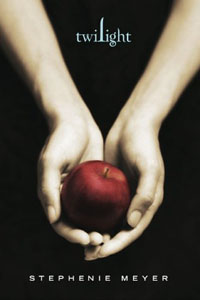
I finally did it. I read Twilight[1], mostly because I wanted to see what all the fuss was about, but also because, as a Latter-day Saint, I wanted to see how elements of Mormon culture and theology had seeped into Stephenie Meyer’s story. Such an act is inevitable, really, on both sides of the text: as a reader, I bring my own unique baggage to my reading, things such as personal character, life experience, my conception of Mormon theology, academic training as a literary critic, and the ebb and flow of my desire to escape reality. Such things constantly shape the way I respond to, interpret, and ingest any text. And the same goes for the writer: his or her character, experience, theological inclination, education, gender, etc. tend to shape the form and content of what they write, though not always because the writer consciously builds it into the work and not always to a great degree. In this way, reading and writing, as all forms of art, are an extension and expression of the reader’s/writer’s self, the fruit growing out of individual character.

Speaking specifically of the writer’s part in this relationship, the late William Mulder, professor emeritus of English at the University of Utah, writes that an individual’s “‘enterprise as a writer’ […] is his or her ‘essential gesture as a social being.’” In this light, he continues, “the writer’s word is the writer’s deed wielding potential power and influence and becomes a test of character and courage.”[2] In other words, writing is a social act and the writer’s voice, a source of personal power and freedom and a manifestation of the individual’s courage or the lack thereof, reflects the society from which it springs—and in reflecting it strengthens or subverts (sometimes even both) that society.

What, then, are Stephenie Meyer’s essential gestures as a Mormon writer? What does she add to or take away from the culture and theology of her professed religion? What does Twilight say, per se, about the Latter-day Saints?

From the epithet printed at the beginning of her novel—“But of the tree of the knowledge of good and evil, thou shalt not eat of it; for in the day that thou eatest thereof thou shalt surely die”[3]—it would appear that Meyer means to approach the notion of free will. It might have been easier to do this, however, by creating a world in which something other than fate presides. As it now reads, Twilight is less about agency than it is about “tempting”[4], “interfering with”[5], or “fighting fate”[6]; about “choos[ing] […] to conquer the boundaries of a destiny that none of [its characters] wanted”[7]—a theological framework, by the way, not exactly on a par with being “free to choose liberty and eternal life, through the great Mediator of all men, or to choose captivity and death, according to the captivity and power of the devil”[8]. Sure, as Meyer admits, “the underlying metaphor for her vampires” and by extension her humans is that “[i]t doesn't matter where you're stuck in life or what you think you have to do; you can always choose something else. There's always a different path.”[9] But the particulars of her story show otherwise.

I’m sure you’re aware of that story by now: A girl, Bella, leaves her mother’s home in Phoenix to live with her dad in Forks, Washington (read: her own personal hell). On her first day of school she sees a boy, Edward (the vampire), from across the cafeteria and they instantly crush on each other. Both try to deny their overwhelming attraction—she because she lacks self-confidence and he seems so untouchable; he because of the bloodlust she arouses in him against his wild animal-feeding will. Once they get together, however, the stars align, their fate is sealed, and, after proclaiming their unconditional, irrevocable love for one another, they must fight a thirsty pair of vampires for Bella’s life.

The question of agency emerges perhaps most forcefully from Meyer’s adverb-laden and loosely prosed narrative progression (which is more like watching a movie than reading well-crafted fiction) when both Bella and Edward go through the motions of deciding to be together, alternatives and opposition notwithstanding (though I use both of these terms lightly). After allowing for the fact that Edward could be a vampire, Bella supposedly considers the “two options” before her: one, “to avoid him as much as possible” and “[t]o tell him to leave me alone—and to mean it this time”[10]. However, she patently rejects this option because she is essentially unable to control her emotions, admitting to herself, “I could do nothing different.” The undertone carried in this comment that she is fated to love Edward becomes more apparent when, just two paragraphs later, she further admits,

I didn’t know if there ever was a choice, really. I was already in too deep. Now that I knew [about Edward] […] I could do nothing about my frightening secret. Because when I thought of him, of his voice, his hypnotic eyes, the magnetic force of his personality, I wanted nothing more than to be with him right now.[11]

The only choice Bella really has, then, is to submit to a relationship and a destiny that are well beyond her control. And that she determines to do just that becomes obvious later, just before her first real date with Edward and after she realizes that the fate of their bond “depend[ed] entirely upon his decision, or his instincts”, when she confesses, “My decision was made, made before I’d ever consciously chosen, and I was committed to seeing it through. […] [T]urning away from him. […] was an impossibility”[12].

Edward essentially confesses the same impossibility of resisting fate, while at the same time acknowledging the possibility of working within the fated parameters of a life (again, not the same thing as agency), when he tells Bella about his inability to resist her scent and about how enamored he’d become of her human idiosyncrasies, both things that made his decision to be with Bella for him. Speaking later to Bella’s question (given in her words) about “how you can work so hard to resist what you…are”, Edward elaborates on this understanding of fate: “[Y]ou see,” he says, “just because we’ve been…dealt a certain hand…it doesn’t mean that we can’t choose to rise above—to conquer the boundaries of a destiny that none of us wanted.”[13]

Therein emerges Twilight’s essential gesture toward free will, namely that we’re living a life none of us really chose to live, making decisions about how to travel a predetermined path, experiencing emotions over which we really have no control. The fundamental un-Mormoness of this treatment of agency—which posits that most everything about mortality, including our decision-making, is predetermined and, thus, beyond our control—is clear to anyone with a basic understanding of the LDS conception of the plan of salvation. And whether or not it was an intentional decision on Meyer’s part, in the end it presents a potentially damaging view about agency, life, love, and eternity to its target audience, youth, a group (especially within the Church) highly susceptible to her supposed authority as a Latter-day Saint writer.

Despite my objections about the novel’s representation of agency and love, I found Twilight a decent, fast-paced romance and I recommend it for older youth and young adults and their parents, especially for the talking points it presents about love versus lust and the personal responsibility inherent in the values of choice and accountability.


Footnotes:

[1] Meyer, Stephenie. Twilight. New York: Little, Brown, 2005.
[2] Mulder, William. “’Essential Gestures’: Craft and Calling in Contemporary Mormon Letters.” Weber Studies 10.3 (1993). 14 Aug. 2008.
[3] Genesis 2:17.
[4] Meyer 142.
[5] 174.
[6] 191.
[7] 307.
[8] 2 Nephi 2:27.
[9] Grossman, Lev. “Stephenie Meyer: A New J.K. Rowling?” www.time.com. 24 Apr. 2008. 14 Aug. 2008.
[10] Meyer 138.
[11] 139; italics mine.
[12] 248.
[13] 306-7.

Tuesday, August 12, 2008

In Maternity (Poem)

In Maternity

Standing beside the bed after her mother’s
hysterectomy, my wife recounts her day,
moving hands beneath blankets to chase
the cold and cramps from Mom’s feet.

Where their contours meet in the heavy,
anesthetic light, I imagine, from my place
in the room’s corner, the moment
when one becomes two, when
a mother’s blood sears the flesh,
transfers breath for the life in the womb.

Then the door opens and my wife’s
pregnant shadow unfolds
against the crack spread by a nurse
and filled with a newborn’s expanding cry.

Wednesday, August 6, 2008

Shadows (Poem)

Shadows
(For Dad)

He calls me to his room
when I fall into silence
instead of

putting myself on the line
in the company of peers.
As I enter his heritage,

he puts finger to lips
and points to the shadows
where his father sits

in a threadbare chair,
reading the world
through a closed window.

Tuesday, August 5, 2008

The Pattern of Pilgrimage and God's Covenant Race

In every dispensation since the beginning of time, God’s people have been characterized as “wanderers in a strange land” (Alma 13:23). The first couple on Earth, Adam and Eve, was cast from the Garden of Eden according to the Divine plan and thence left to roam the lone and dreary world, a sphere quite unlike Paradise—one full of opposition, uncertainty, adversity, and fear. Enoch, after receiving his divine commission, ventured “forth in the land, among […] people” who described him and his work as “strange” (Moses 6:37-38). Noah and his family drifted over the waters for what must have seemed an endless duration, bound for no place in particular, yet always bearing in mind their mission to perpetuate God’s kingdom anew in the recently purified world. Abraham was led by the Lord out of “the land of the Chaldeans, […] the residence of [his] fathers” to, as the apostle Paul expressed, “sojourn[…] in the land of promise, as in a strange country” (Abraham 1:1; Hebrews 11:9). The great wanderer, Moses, led the children of Israel into the Arab wilderness, away from Egypt, to struggle and to fight for forty difficult (to say the least) years.

On the American continent, far from these Old World counterparts, the Lehites (having already traversed the deserts of Arabia and sailed across the many waters, always led by the hand of Jehovah) wandered around and around for hundreds of years. And hundreds of years before this, the Jaredites filtered across the sea and drifted through the same land.

In his own time, Christ, who not only knew but is the Way, affiliated himself with this elite group of sojourners when he ventured into the wilderness for forty days and forty nights before the commencement of his mortal ministry, which in turn led him to wander the land of his own people, the Jews, all the while preaching, teaching, and healing. Indeed, as he once said of himself, “The foxes have holes, and the birds of the air have nests; but the Son of man hath not where to lay his head” (Matthew 8:20).

And finally, in our own dispensation, headed by Joseph Smith (who seemed always to be on the move), the Lord’s saints—our forebears—were forced to move from city to city in America’s East, until, at last, the Lord commanded them, through Brigham Young, to “journey[…] to the West,” the barely inhabitable desert, to make their earthly home (D&C 136:1).

Such references to this pattern of pilgrimage are as endless as the wanderers and their wanderings. Certainly the whole canon of scripture, as well as much secular literature, is replete with humanity’s quest for something more, with homesickness, a wanderlust leading its possessors to leave their present abodes and to venture into the wilderness—whether physical, psychological, or emotional—in search of true belonging, something they’re never quite able to find. This yearning and its subsequent lack of fulfillment are perhaps best illustrated in Eliza R. Snow’s words, found in our hymn “O My Father”: “[O]fttimes a secret something / Whisper[s], ‘You’re a stranger here’” (Hymns, 292); and if strangers, then far from Home. T.S. Eliot, the 20th century poet, captured a similar sentiment in the following lines: “With the drawing of this Love and the voice of this Calling // We shall not cease from exploration” (“Little Gidding,” Four Quartets, line 238-9). Such homesick wanderlust is the common lot of all humanity, through time and through space.

Yet, some vital differences arise when we consider this pattern as it relates to God’s covenant race. Hugh Nibley, prominent Latter-day Saint scholar, explains these differences thus: “While some groups […] have been driven into the wilderness against their will—though always with a measure of calculation on their part—one church alone has had the honor of resembling Israel on the march in all details without having to resort to any of the usual artificial devices and theatrical plots” of those who simply take to the wilderness of their own accord, seeking to replicate in a laboratory, as it were, the conditions naturally surrounding the people of God. He continues:

The parallels between the history of the restored Church and the doings of the ancients are so numerous and striking that even enemies of the Church have pointed them out again and again—what writer has not compared Brigham Young to Moses, for example? But I think in the case of the Latter-day Saints these resemblances have an extraordinary force, and that, for two main reasons: (1) that they are not intentional and, (2) that they actually are the fulfillment of modern-day prophecy.

The prophecy in question is found in the Doctrine and Covenants 49:24-25:

“But before the great day of the Lord shall come, Jacob shall flourish in the wilderness, and the Lamanites shall blossom as the rose. Zion shall flourish upon the hills and rejoice upon the mountains, and shall be assembled together unto the place which I have appointed.”

It is significant that all three of these “chosen people” were to suffer and dwell in the wilderness before the days of their rejoicing. The trials and tribulations of Zion in a very real wilderness in the remotest regions of the earth were matched by those of the Lamanites, driven from their lands and reduced to the last extremes of poverty and hardship in miserable and out-of-the-way tracts of wood and desert, and even more closely resemble the untold labors and dangers of the heroic settlers in the barren wastes of modern Palestine. All this is a sequel and vindication of the Book of Mormon, binding the Old World and the New together in a single divine economy, as the prophets foretold. The principal actors of the mighty drama are still the descendants of Lehi on the one side and the children of “the Jews […] at Jerusalem” on the other, and the scene of their trials and victories is still as ever the desert.[1]

As recipients and results of this pioneer past and as participants in the Lord’s continuing pattern of pilgrimage, through which he deems to keep us separate from the world and to make Saints of us, it seems appropriate to ask ourselves a simple question: Therefore, what? In other words, what does all this talk of pioneers and pilgrimage, wandering and wilderness really have to do with us? Does it mean we should trek through the wilderness (as our youth groups often do), trying to recreate for ourselves, in a sometimes, I fear, too sensational way, the extremities of our forebears’ lives?

I’m convinced that such isn’t required of us and that we can honor our pioneer heritage by learning of them and their experiences, yes, but also by living our own lives in faith, by being pioneers in our right, whether that be by leading the way into Christ’s Church as converts (something we all must do in one way or another) or by “build[ing] the […] waste places” that have been razed in our family lines and experiences, enduring the slings and arrows of our family (mis)fortunes by planting our kids in the firm foundations of faith and righteousness so that we might become, as Isaiah prophecies, “The repairer of the breach, The restorer of paths to dwell in” (Isaiah 58:12). Only then can we be “a light unto the Gentiles, and through [God’s] priesthood, […] savior[s] unto [his] people Israel” (D&C 86:11), bringing many to experience the paradoxesthe heights and depths, the joys and miseriesof sainthood as we press forward, our historical position notwithstanding, in pioneering faith.

[1] An Approach to the Book of Mormon. Salt Lake City: Deseret Book, 1988. 154. Emphasis mine.

Saturday, August 2, 2008

Coming of Age in The House on Mango Street

Recently, I had my wife read Sandra Cisneros' first novel, The House on Mango Street. It's a simple tale "of a young girl growing up in the Latino section of Chicago," "[t]old in a series of vignettes stunning for their eloquence" (says the blurb on the the back cover). It's been a while since I read it, but as I was mining my old school files for blog possibilities, I found this short critical essay that I wrote for the novel writing class I had. We read a couple of novels to practice reading as writers and I really enjoyed this one for its simplicity and innovative appeal. After rereading what I've written here, I think I'll pick up the novel and read it again.

****

Coming of Age in The House on Mango Street

In Sandra Cisneros’ novel, The House on Mango Street, all Esperanza wants to do is leave the “sad red house” of her childhood, “the house [she] belong[s] to but do[es] not belong to” (110), the house that hangs always on the edge of her memory, turning her away while at the same time calling her home. This state of liminality, of nether worldness, characterizes Esperanza’s experience throughout the whole of Cisneros’ novel: She broods over the edge of childhood, more mature than her peers, but is not yet able to see into the adolescent realm, to participate in teenaged games. Learning in and through such liminality and coming into oneself, one possible theme of The House on Mango Street, is characterized by ceremonial rites which initiate the wanderer (in this case, Esperanza) into the next phase of his or her development. One such rite of passage occurs in Esperanza’s life when she gets her first job and learns what is expected in the grown-up sphere by watching the older women work and by innocently falling prey to the guiles of a horny old man. And while she does not yet fully understand the workings of this world, the first stage in her initiation into young womanhood has begun. She has moved forward and can never go back, no matter how much she desires to return. Hence, she begins to view the happenings of her life in a more mature (and often harsh) light. While sitting with her crying father (whose own father has died) and confronting the blindness of disease through her aunt’s eyes, she learns the value of familial support and feels the tugging of a family’s painful bonds of hope tying her to generations gone before. At this same time, and even as a result of these experiences, she begins to “dream the dreams” (61) of individuation, to build her own self from the lives of her forebears, thinking about what she would do if her papa died and taking her aunt’s advice to “keep writing” because “it will keep you free” (61).

Also characteristic of this exploration between two worlds is Esperanza’s desire to leave home, and thus her family, for good, to find something better somewhere—anywhere—else. She denies her place in Mango Street over and over, most notably with Elenita, the fortuneteller, who tells her that she will find “a home in the heart” (64) when all Esperanza wants is a home away from Mango Street. She only begins to accept her place when Lucy’s and Rachel’s aunt “with the marble hands” (105) tells her that when she leaves, she “must always remember to come back” for “the ones who cannot leave as easily” (105). And though she does not wholly understand this charge, she accepts her place as a “special” one who will “go very far” (104) because she has, only a short time earlier, completed her final initiation rite by choosing to leave the paradise of childhood, represented by the monkey garden, and subsequently falling from innocence at the hands of the boy with the “sour mouth” and “dirty fingernails” (100). Through this experience, she learns once and for all that the world of men and women is not anything like the world embellished in “books and magazines, everything that told it wrong” (100; emphasis mine). Rather, it is a sometimes bitter reality where not everyone can have what they want or even what they need. This is her ultimate point of turning, her final passage into young womanhood, the point wherein she fully realizes that she has to be the one to change poverty-stricken Mango Street into a better place; that even though she might have a real home of her own someday and she must have a home in her own heart, she must also reach out from this point of wholeness, from her centering point, and go back to Mango Street to gather, to encourage, to console “the ones [she] left behind. […] the ones who cannot out” (110). It was only when she comprehended this that she truly came into herself.

****

Cisneros, Sandra. The House on Mango Street. New York: Vintage, 1984.